



Caring for your dog’s wounds at home can be daunting. But with the right knowledge, it’s manageable. This overview of at home dog wound care focuses on dog safe wound care basics you can apply with confidence.
Understanding how to treat wounds is crucial for your pet’s health. It ensures quick healing and prevents complications.
This guide will walk you through essential tips for at home dog wound care. You’ll learn how to assess, clean, and protect wounds as part of practical dog skin wound care.
We’ll also cover when to seek veterinary help. Knowing these basics can make a big difference in your dog’s recovery.
Let’s dive into the world of dog wound care and keep your furry friend safe and healthy.
Understanding Dog Wounds: Types and Severity
Not all dog wounds are the same. Recognizing the type and severity is the first step in dog wound care at home and overall wound care for dogs.
There are several common types of wounds your dog may experience. These include cuts, abrasions, punctures, and lacerations. Each requires a slightly different approach.
Assessing severity is critical. Minor wounds can often be handled at home, while severe injuries need veterinary care.
Signs of a serious wound include heavy bleeding, deep gashes, or exposed tissue. These need immediate professional attention.
- Minor Cuts: Small, often shallow; handled with basic dog cut care.
- Abrasion: Scrapes on the skin’s surface, common in dog skin wound care.
- Puncture Wounds: Deep, with risk of infection.
- Lacerations: Deeper, jagged cuts.
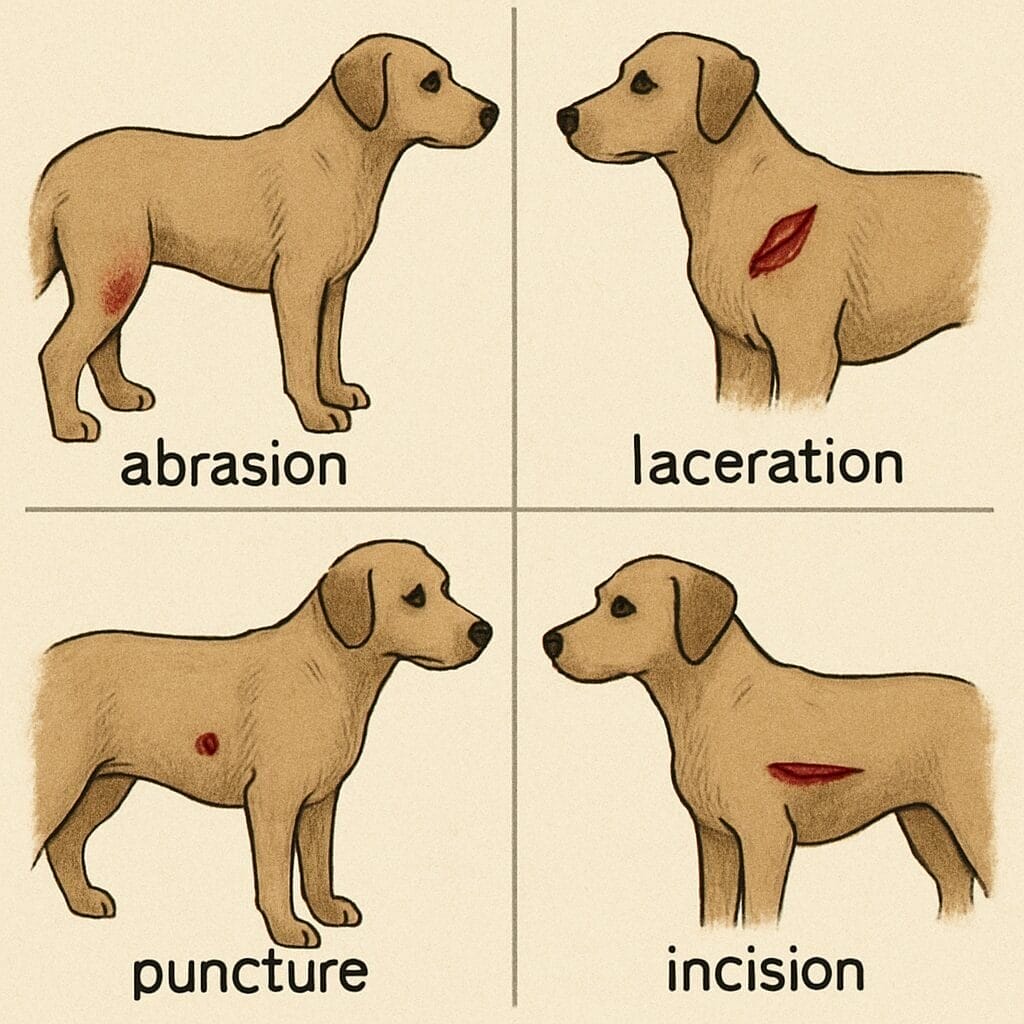
Accurately identifying the wound type and severity will guide you in caring for your dog and support safe at home wound care for dogs.
When to Seek Veterinary Care
Some wounds look minor but can still pose serious health risks to your dog. Recognizing when to get professional help is crucial.
If your dog has a wound with heavy bleeding that doesn’t stop after a few minutes, it’s essential to contact a vet. This includes situations with deep cuts or large punctures.
Persistent swelling, redness, or discharge suggests infection. Also, if your pet shows signs of pain or distress, seek immediate veterinary attention.
- Non-stop bleeding.
- Exposed bone or tissue.
- Signs of infection: swelling, redness, discharge.
Knowing when to consult a veterinarian for wound care for dog health can make a difference in your dog’s recovery. Prioritize their health by being vigilant.
Must-Have Supplies for Dog Wound Care at Home
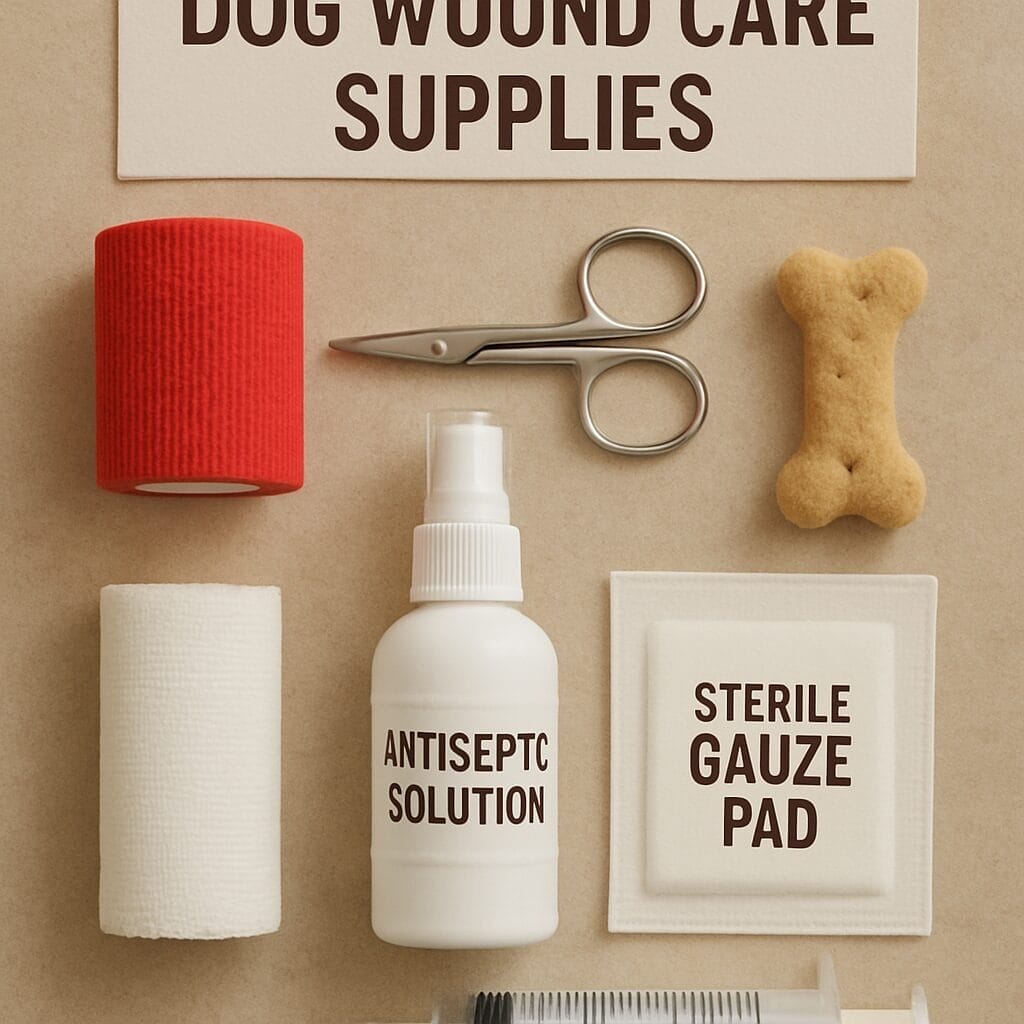
Having the right supplies on hand can make wound care for dogs at home more effective. A well-stocked pet first aid kit is essential.
Key items include a dog-safe antiseptic, sterile gauze, and adhesive bandages. These items help clean and protect the wound. Choose dog safe wound care products labeled for pets and avoid harsh human formulations unless your vet advises otherwise.
Additional supplies, such as an Elizabethan collar, can prevent your dog from licking the wound. Keep these ready for emergencies.
- Dog-safe antiseptic solution
- Sterile gauze and adhesive bandages
- Elizabethan collar
Organize your supplies for easy access. Having these items ensures you can provide timely and effective care for your dog’s injuries and general wound care for dogs.
Step-by-Step Guide: How to Care for Your Dog’s Wound at Home
Caring for your dog’s wound at home requires careful steps to ensure proper healing. Follow this guide for dog wound care at home and thoughtful at home wound care for dogs.
1. Ensure Safety and Calm
Before you start, keep your dog calm to avoid further injury. A stressed dog may resist care.
Use soothing words and gentle strokes to ease their anxiety. Distraction techniques, like treats or toys, can also help.
- Speak softly and soothingly
- Provide a favorite toy or treat
- Use calming sprays if necessary
Your calm demeanor reassures your dog and makes wound care smoother.
2. Assess and Prepare the Wound Area
Check the wound to determine its severity. This assessment guides your care approach.
Trim the hair around the wound to see it clearly. This step prevents further contamination.
- Examine the size and depth of the wound
- Trim hair using blunt-end scissors
- Collect your cleaning supplies
Proper preparation ensures the wound is ready for cleaning.
3. Clean the Wound Properly
Cleaning the wound removes dirt and reduces the risk of infection. Use a gentle approach for this process.
Rinse the wound with a saline solution; avoid harsh chemicals like hydrogen peroxide. A clean wound heals faster.
- Use a saline solution or dog-safe antiseptic
- Gently pat dry with a sterile cloth
- Avoid alcohol as it irritates

Thorough but gentle cleaning is crucial for healing and is central to dog skin wound care.
4. Stop Bleeding and Protect the Wound
If the wound is bleeding, apply pressure to stop it. Quick action is key for wound care for dogs at home.
Use a sterile gauze pad to press on the wound. Keep the gauze in place for a few minutes.
- Apply gentle pressure with gauze
- Elevate the wound if possible
- Use a clean cloth for added pressure

Once bleeding stops, move on to protection.
5. Bandage and Prevent Licking
Covering the wound is a critical step in dog injury care. This prevents licking and further infection.
Wrap the wound with a non-stick pad and secure it with gauze. Ensure it’s snug but not tight.
- Place a non-stick pad over the wound
- Wrap with gauze or bandage
- Fit an Elizabethan collar if needed

Bandaging helps in keeping the wound clean and speeds up recovery for effective dog wound care at home.
Ongoing Care and Monitoring for Healing
Proper care continues beyond initial treatment. Monitoring the wound is crucial for healing success. Regularly check the wound for signs of infection such as redness or swelling.
Maintain a consistent schedule for bandage changes. Clean the area before reapplying dressings. This prevents bacteria build-up and supports ongoing wound care for dogs.
- Inspect the wound twice daily for changes
- Replace bandages every 1-2 days
- Look for discharge as a sign of infection
Encourage your dog’s rest. Limit their activity to prevent wound reopening. A calm environment promotes healing.

Keep track of any behavioral changes. An increase in licking or limping may suggest discomfort. If such signs appear, consider consulting your veterinarian. Regular care ensures recovery stays on track, preventing complications.
Recognizing and Preventing Complications
Complications can occur if wound care is inadequate. Recognizing early signs helps avoid severe issues. Look for persistent redness, swelling, or bad-smelling discharge.
Preventing complications starts with effective wound care. Keep wounds clean and dry. Use appropriate antiseptics to lower infection risk. Effective at home wound care for dogs reduces the chance of setbacks.
- Redness or swelling is a warning sign
- Foul smells indicate possible infection
- Consult a vet if symptoms worsen
Monitoring your dog’s behavior offers additional insight. Changes like lethargy or disinterest in food can signal problems. Prompt action ensures your pet’s recovery stays smooth and uncomplicated.
Tips for a Smooth Recovery and Preventing Future Injuries
A clean, safe space supports your dog’s recovery. Reduce activity to prevent strain on wounds. Offer comfort and ensure your dog rests.
Proper diet boosts healing. Nutrient-rich foods promote tissue repair. Hydration is equally important to support the body’s natural processes.
Preventing future injuries requires vigilance. Regularly check your home for hazards and sharp objects. Monitor your dog’s playtime to avoid rough behavior.
- Create a calm recovery zone
- Provide balanced meals and hydration
- Dog-proof your home to minimize risks
By following these steps, you help your dog heal and reduce injury risks. Incorporating sensible at home dog wound care habits makes recovery smoother.
Frequently Asked Questions About At-Home Dog Wound Care
Dog owners often have questions about caring for wounds at home. Addressing common concerns helps ensure effective, safe healing for pets. Some queries are more frequent than others.
Here are some frequently asked questions:
- What should I use to clean the wound? (Think saline or a pet-labeled antiseptic suitable for dog skin wound care.)
- How can I prevent my dog from licking the wound?
- What signs indicate an infection is developing?
- What products are considered dog safe wound care for minor cuts?
Addressing these FAQs can help you better care for your dog’s wounds safely and effectively at home, including basic wound care for dogs at home.
Conclusion: Keeping Your Dog Safe and Healthy
Caring for your dog’s wounds at home can be challenging but rewarding. With proper techniques and vigilance, you can support effective healing. Always prioritize your dog’s comfort and well-being during the recovery process.
Keep your pet’s environment clean and stress-free. Regular checks and preventive measures will go a long way in ensuring your dog’s safety and health through consistent wound care for dogs at home.
Q&A
Question: How can I tell if my dog’s wound can be treated at home or needs a vet?
Short answer: Start by identifying the wound type and checking severity. Minor cuts and surface abrasions can usually be managed at home, but heavy bleeding that won’t stop, deep gashes, large punctures, or exposed tissue require immediate veterinary care. Persistent swelling, redness, discharge, or signs of pain and distress are also reasons to contact a vet.
Question: What supplies should I keep on hand for at-home dog wound care?
Short answer: Stock a pet first aid kit with a dog-safe antiseptic solution, sterile gauze, adhesive bandages, and an Elizabethan collar to prevent licking. Choose products labeled for pets and avoid harsh human formulations unless your vet advises otherwise, and keep everything organized for quick access.
Question: What’s the proper way to clean my dog’s wound?
Short answer: Keep your dog calm, trim the hair around the area to see clearly, then rinse the wound with saline or a pet-labeled antiseptic. Gently pat dry with sterile material. Avoid hydrogen peroxide and alcohol, as they can irritate tissue. If there’s bleeding, apply gentle pressure with sterile gauze until it stops.
Question: How should I bandage the wound and stop my dog from licking it?
Short answer: Place a non-stick pad over the cleaned wound, secure it with gauze or a bandage so it’s snug but not tight, and fit an Elizabethan collar if needed. This protects the area from contamination and licking, helping prevent infection and speeding recovery.
Question: How do I monitor healing and spot complications during recovery?
Short answer: Inspect the wound twice daily for changes, and replace bandages every 1–2 days, cleaning the area before re-dressing. Watch for warning signs like increasing redness, swelling, discharge, or foul odor, and note behavior changes such as more licking or limping. Limit activity to prevent reopening the wound and consult your vet if symptoms worsen.


